A knife show with a police station as a supporting partner is not the format most collectors expect. The 2026 Beijing International Knife Show listed the Pingfang Police Station of Chaoyang District among its supporters and built an on-site anti-fraud public welfare zone into the program.
The announcement ties this to the national anti-fraud awareness campaign. The zone was described as using interactive displays, scenario simulations and knowledge quizzes to raise awareness and prevention capability among the public, with particular attention to young male demographics. That audience is the same one the show's "he economy" framing was built around, so the choice of partner and the choice of visitor are connected.
Why a niche show takes on a civic brief
The organizers said the initiative responds to a national campaign while adding social value to an event that might otherwise be read purely as commerce and cultural display. Chinese coverage of the announcement frames it as moving the show beyond a stage for transactions into a vehicle for public-interest messaging. For a first-edition event in a category as scrutinized as edged objects, that framing is also a practical one: visible cooperation with local police is part of establishing that the event can be run responsibly.
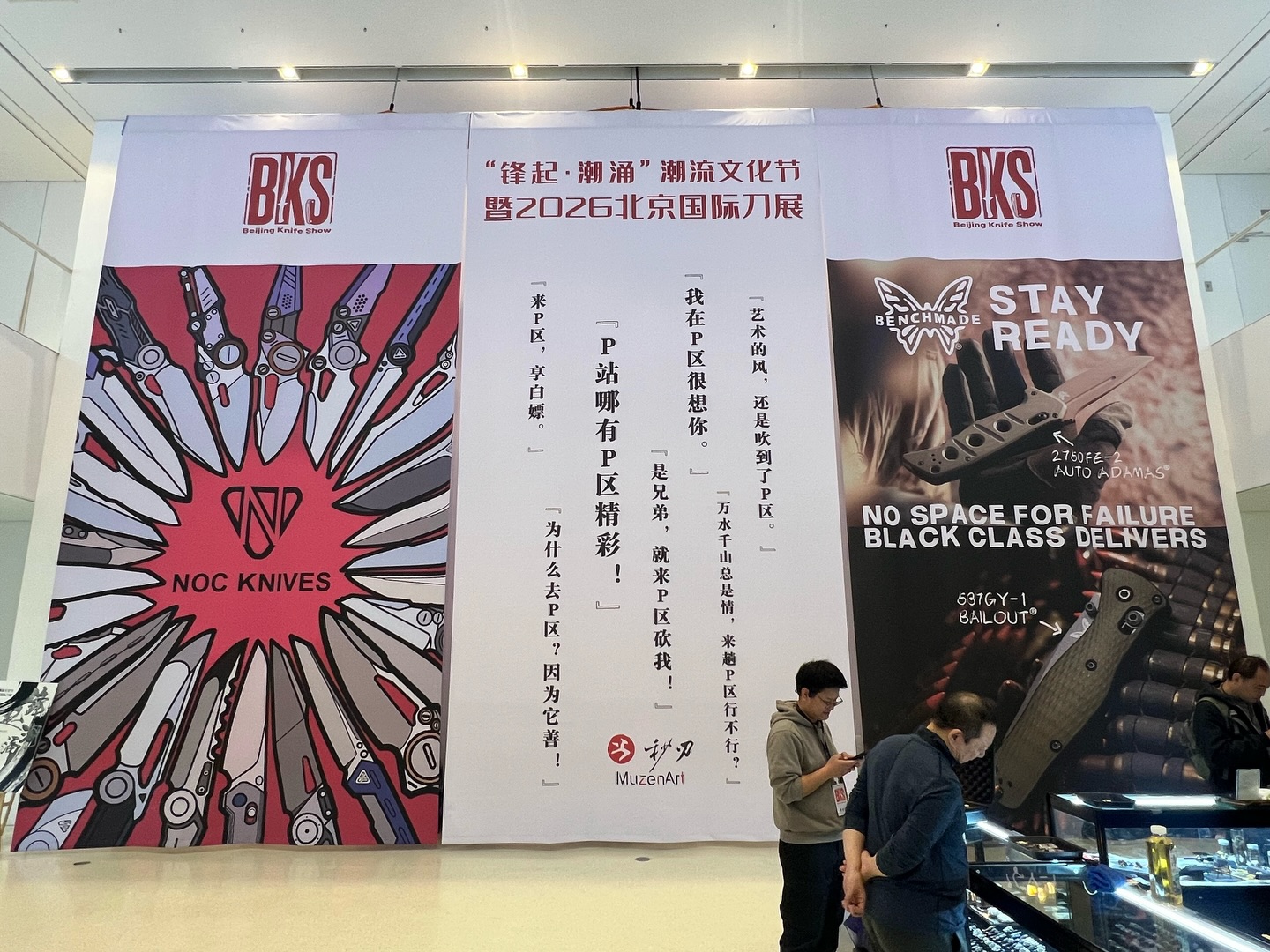
"'Edge Rising · Tide Surging' is not merely a show, it is a declaration of lifestyle attitude," the organizers stated, adding that they hoped to use the knife as a symbolic object to awaken appreciation for craftsmanship, individuality and self-expression.

Read alongside the anti-fraud zone, that statement reads less like marketing copy than a description of the event's dual brief. The show wanted to be a lifestyle gathering and, at the same time, a well-run public event with a civic component. Neither half replaces the other.
What the design of the zone implies
Interactive displays, scenario simulations and quizzes are not a lecture format. They assume a visitor moving through a hall, stopping for a few minutes between exhibitor tables, and engaging with something that asks for a response. That matches the show's own promise of professional guided tours, efficient traffic flow and diverse interactive segments across three days in January.
The event ran January 16 to 18, 2026, at the Damei Center Art Center in Chaoyang District, open 10:00 to 18:00 with VIP entry at 09:00. Venue construction was scheduled for the evening of January 15. No post-event figures were published for how many visitors passed through the anti-fraud zone, so its reach cannot be measured from the announcement alone.
No attendance figure or visitor count for the anti-fraud zone was published after the January event, so its reach cannot be measured from the announcement alone. What is on the record is the partnership itself and the choice to place it in the core program description. For a first-edition show in a category that attracts regulatory attention, visible cooperation with local police is part of establishing that the event can be run responsibly. That is a different kind of value than the lifestyle framing, and the announcement gave both roughly equal weight.
What is on the record is the decision itself. A regional knife show chose to include a police-led public welfare program in its core announcement rather than burying it in an appendix.