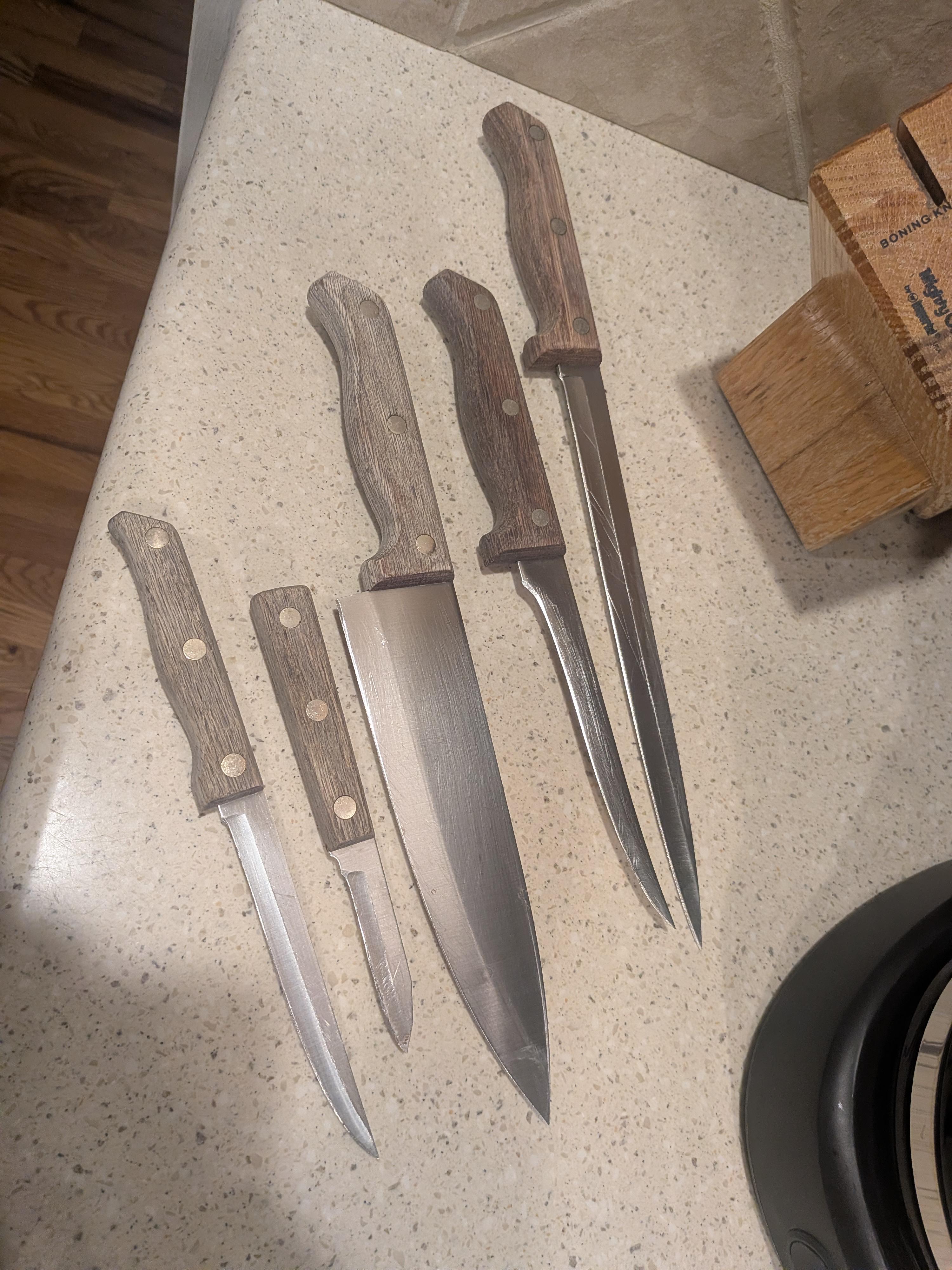
A set of early-1980s kitchen knives with worn wooden handles, inherited from grandparents, surfaced on r/knives this week with a plain question attached: how do I bring these back to life? The photo showed five blades, a paring knife through a chef's knife, laid out on a counter next to a knife block, steel mostly sound but dull and spotted from years in storage.
The honest answer starts with an order of operations. Cleaning comes first, rust comes second, the edge comes last, and knowing when to stop matters as much as any of the steps.
Cleaning before anything else
Warm water, dish soap, and a soft brush remove decades of grease without touching the steel. Dry immediately and completely, since carbon steel blades from that era spot within minutes if left wet. Natural handle materials need the same restraint: wood scales on riveted kitchen knives should be wiped, not soaked, and a wipe of mineral oil after drying keeps them from cracking. Mineral oil is also the safe choice for any blade that will touch food again.
Rust versus patina
The gray or brown discoloration on old carbon steel is stable patina, a chemically inert layer that protects the blade, and it should stay. Active rust is different: orange, textured, and it wipes off as powder. Light oil and 0000-grade steel wool, worked along the grind lines rather than across them, removes active rust without reshaping the blade. A Dremel or bench grinder has no place anywhere near this job, because removing steel unevenly is the fastest way to ruin a blade that has survived forty years.
The edge is the last step and usually the easiest. Knives from this period ran modest steels, Japanese carbon blades and entry stainless, so conventional stones handle them without much fuss. Matching the existing bevel beats regrinding it, and a consistent angle at a moderate grit produces a working edge these handles can still support.
One caution sits before all of it. Some knives from the late 1970s and 1980s carry collector premiums in original condition, and aggressive scrubbing can cut that value in half faster than rust ever did. Check the tang stamp against price guides and sales records first, then decide whether the knife is a user to be cleaned up or an heirloom to be preserved. In the r/knives thread the knives in question look like solid working steel with good handles, the kind that reward a careful afternoon with another forty years of service.