A first-time bladesmith spent weeks forging a damascus knife, and two weeks of carry left the blade freckled with dark spots that no amount of polishing seems to lift. The post drew quick responses on r/knives, and it touched on one of the most common anxieties in the knife world: what those spots actually are, and whether they can be undone.
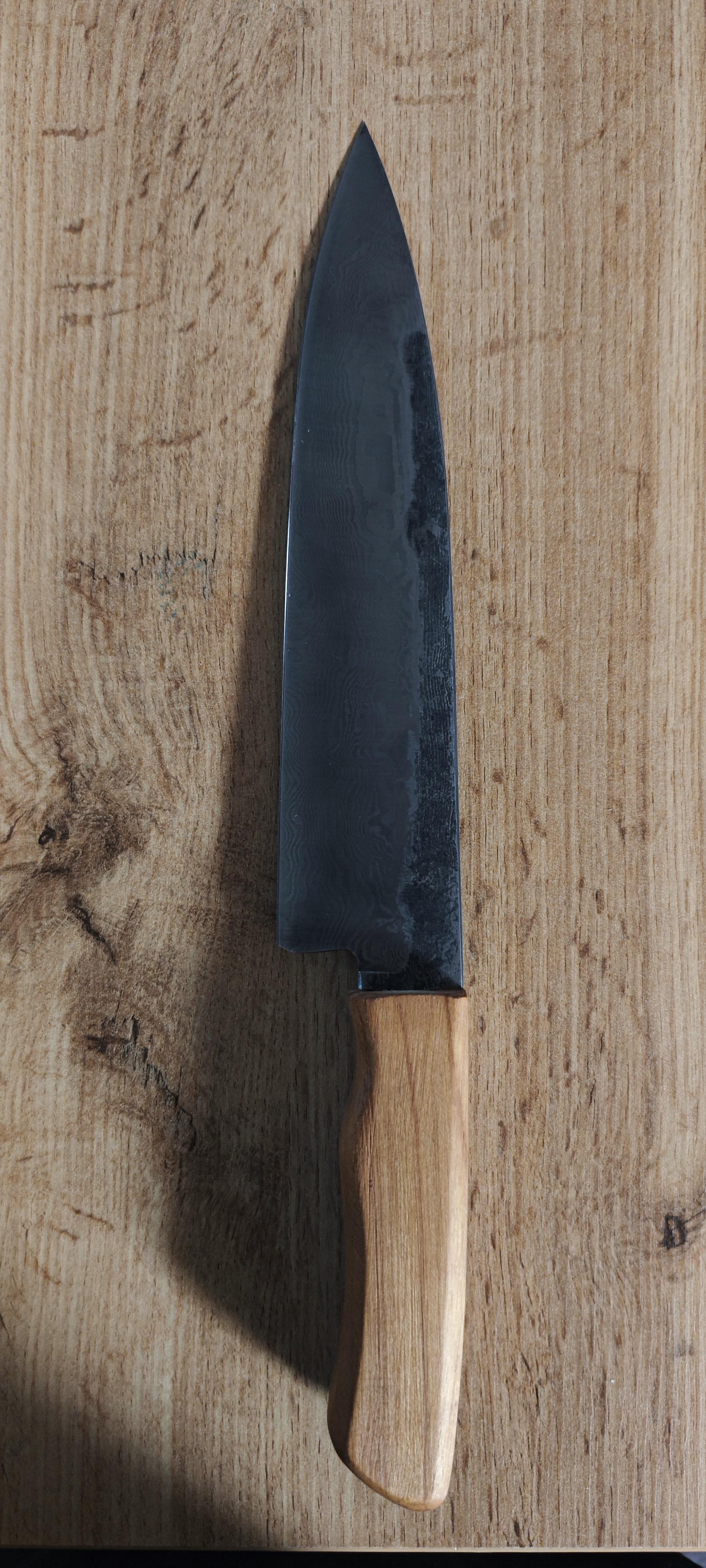
The short answer is that there are three possible causes, and telling them apart takes about ten seconds. Rust announces itself as orange or reddish-brown spots that feel slightly rough or raised, and it transfers color to a white cloth or leaves a smear on a fingertip. Patina is a smooth grey or blue-grey darkening that lies flush with the steel and does not transfer anything; it is a stable oxide layer that actually slows further corrosion. Food staining from onions, garlic or mustard shows up as odd dark patches within a single use and usually fades into the general patina with normal washing.
For a hand-forged carbon damascus blade, the odds favor rust or staining. The etch that produces the pattern works because the two steels react differently: the more reactive layer sits microscopically lower and darker, and those recessed lines are exactly where moisture lingers longest. That is why spots cluster in the pattern's dark bands first, and why a blade left wet in a sheath will freckle within days.
The fix depends on the diagnosis. Light rust lifts with a paste of baking soda and water worked gently along the blade with a soft cloth or cork, followed by a thorough drying and a coat of oil. Patina should be left alone; scrubbing it off with steel wool or a scouring pad removes the etched contrast along with it. Staining needs nothing more than washing, drying and patience. If the spots have eaten into the surface as actual pits, the damage is deeper than a cloth can reach, and the blade needs sanding back and re-etching.
Re-etching is less intimidating than it sounds. The professional route uses ferric chloride, which bladesmiths dilute and control carefully. The kitchen-table route is strong instant black coffee: the tannic acid preferentially etches the reactive layers and restores contrast in 15 minutes to an hour, which is gentler and more forgiving for a first attempt. Either way the blade must be degreased with isopropyl alcohol first, because fingerprints and oil residue produce the uneven blotches that owners then mistake for damage.
Prevention comes down to a two-minute routine. Wash, dry completely, and wipe on a thin coat of food-safe mineral oil. Never put the blade in a dishwasher, never use bleach-based cleaners, and never store it wet in a sheath. Olive and vegetable oils are poor choices because they oxidize and turn sticky within weeks.
The reassuring part for the original poster is that spots on a new blade are not a sign of bad forge work. They are a sign that the steel is genuine: a printed or laser-etched fake pattern never develops spots because it has no reactive layers to stain.