Most people assume BLADE Show West is a smaller copy of the Atlanta original. The dates say otherwise. The western show first ran in 2018, which makes it the middle child of the BLADE family, older than Blade Show Texas and far younger than the June flagship that has been running since the early 1980s. It has spent its short life finding a home rather than inheriting one.
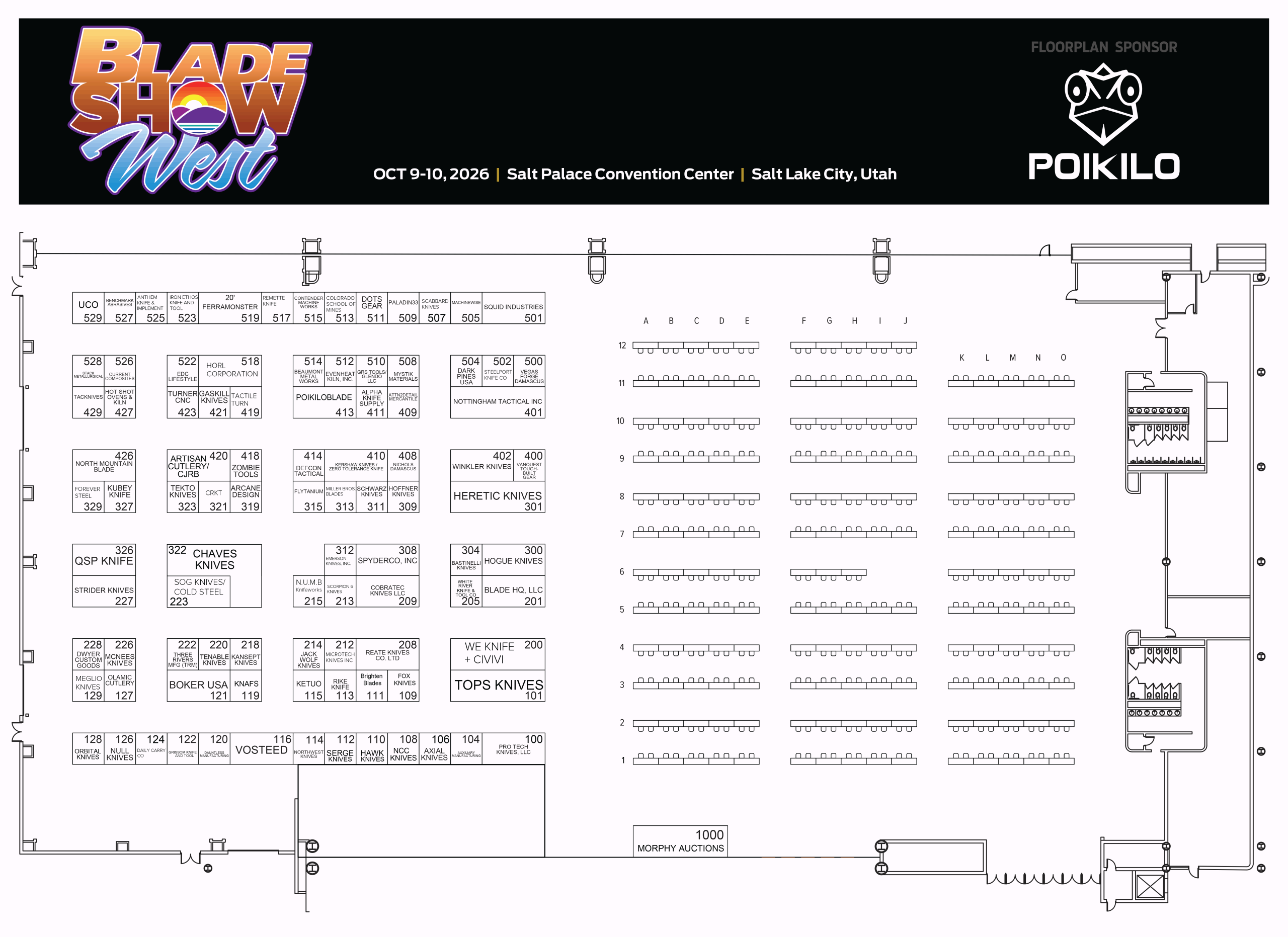
Early editions were held in Portland, Oregon, a city widely treated as a center of American knifemaking. That was a deliberate kind of placement: put a knife show near a concentration of makers and the show floor fills with work that does not travel to every event. Colorado and Idaho add their own makers to the same western catchment, and Utah has a blade-making history of its own.
The 2026 edition landed in Salt Lake City at the Salt Palace Convention Center on October 9 and 10, with more than 250 exhibitors and doors open 10 a.m. to 6 p.m. both days. Moving a show is a risk. Exhibitors rebuild travel plans, attendees recalculate the drive, and the organizer has to prove the new venue can hold the same crowd. The reported turnout suggests the western audience followed.
Reading the circuit as a whole
The three stops now divide the year cleanly. Texas opens in March, Atlanta takes the first full weekend of June, and the western show closes the run in October. Each stop has a different regional draw, so a maker can present work in Fort Worth, gauge the response, then adjust what goes to Atlanta and what travels west in the autumn. Salt Lake City's autumn date gives it the last word on the year's output.
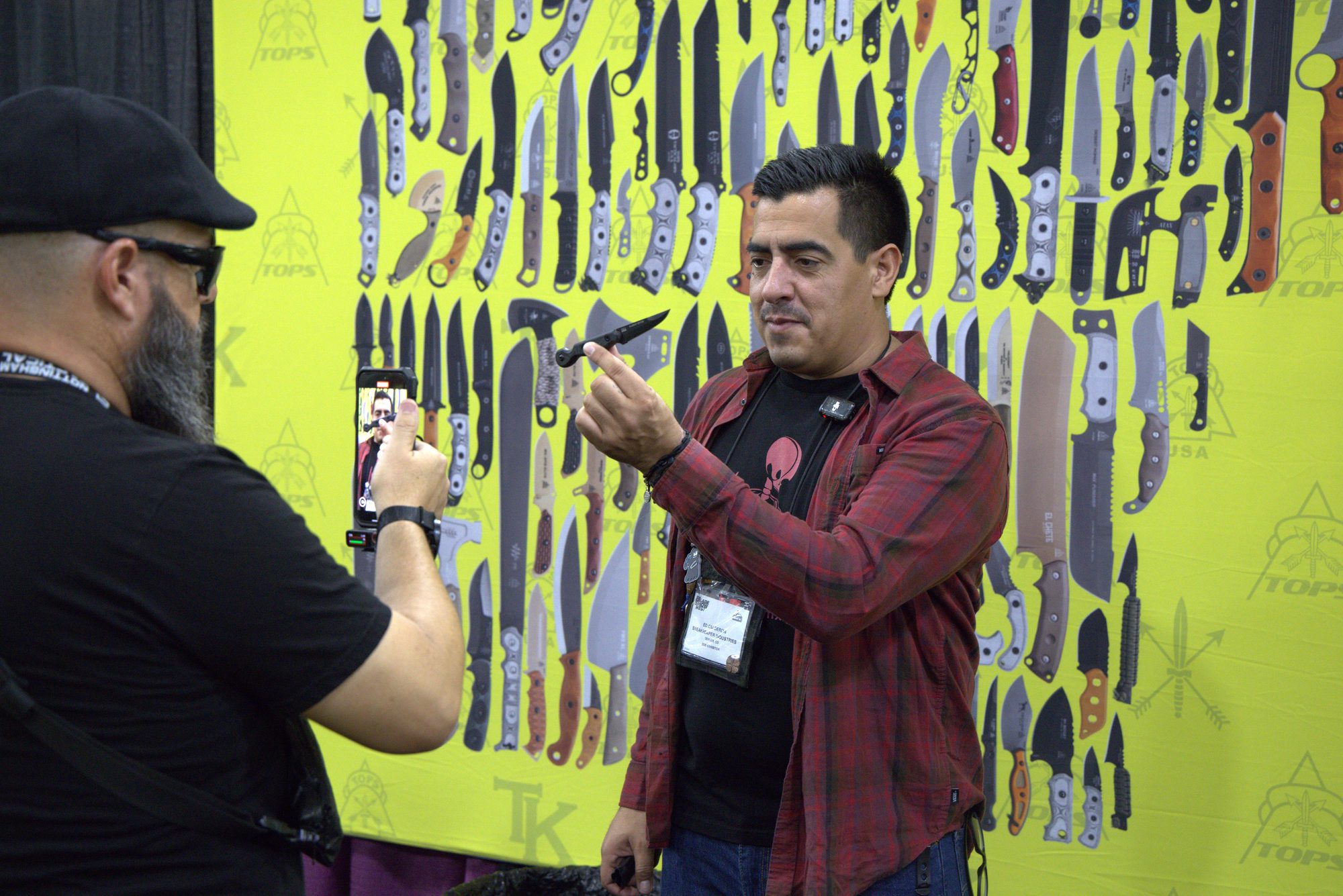
Scale is the other half of the story. The organizer describes the western event as the largest knife show in the west, and the 2026 floor carried factory awards, custom awards, a live forging demonstration and the West Coast Flipping Championships. A show with that much programming is no longer testing whether it belongs on the calendar. It is testing how far it can grow within its region.
Moving a show is never only a change of address. Exhibitors rebuild shipping and travel plans, attendees recalculate whether the trip is a drive or a flight, and the organizer has to prove to sponsors that the audience will follow. Portland gave the western show a maker-dense home; Salt Lake City gave it a convention center, an autumn date and a wider catchment across Utah, Colorado and Idaho. The 2026 edition reported more than 250 exhibitors and a full program of awards, demonstrations and championships, which suggests the audience did follow. A regional show earns its place on a national circuit by surviving exactly this kind of transition, not by inheriting a date.
Salt Lake City also brought the show within reach of a maker network that had no single home. Utah, Colorado and Idaho all have active bladesmiths, and the western stop gives them a regional event that does not require a flight to Atlanta. That is a different proposition from a national flagship: the exhibitor list can be smaller while the local relevance is higher. Organizers have published no attendance totals for 2026, so the scale argument rests on the exhibitor count and the program rather than a gate figure.
Portland gave the show a knifemaking address. Salt Lake City gave it a convention center, a wider western catchment and a place in the autumn calendar. Both mattered, and the move between them is the clearest evidence that BLADE Show West has been built rather than simply scheduled.