One of very few things a r/knives user has left from a grandfather. That is how the post started this week: a navy-issue KA-BAR, still unsharpened, with the owner writing that he knows how to sharpen and has the tools, but has always been torn about touching it.
The knife in the photo is the USN Mark 2, the Navy's designation for the same pattern the Marine Corps adopted in November 1942 as the 1219C2. Union Cutlery of Olean, New York built it under the KA-BAR trademark: a 7-inch clip-point blade in 1095 carbon steel with a fuller, a stacked leather washer handle, and a steel pommel pinned so it could double as a hammer. More than a million of them were issued during World War II across KA-BAR, Camillus, PAL and Robeson, with maker stamps the main way collectors sort wartime examples today.
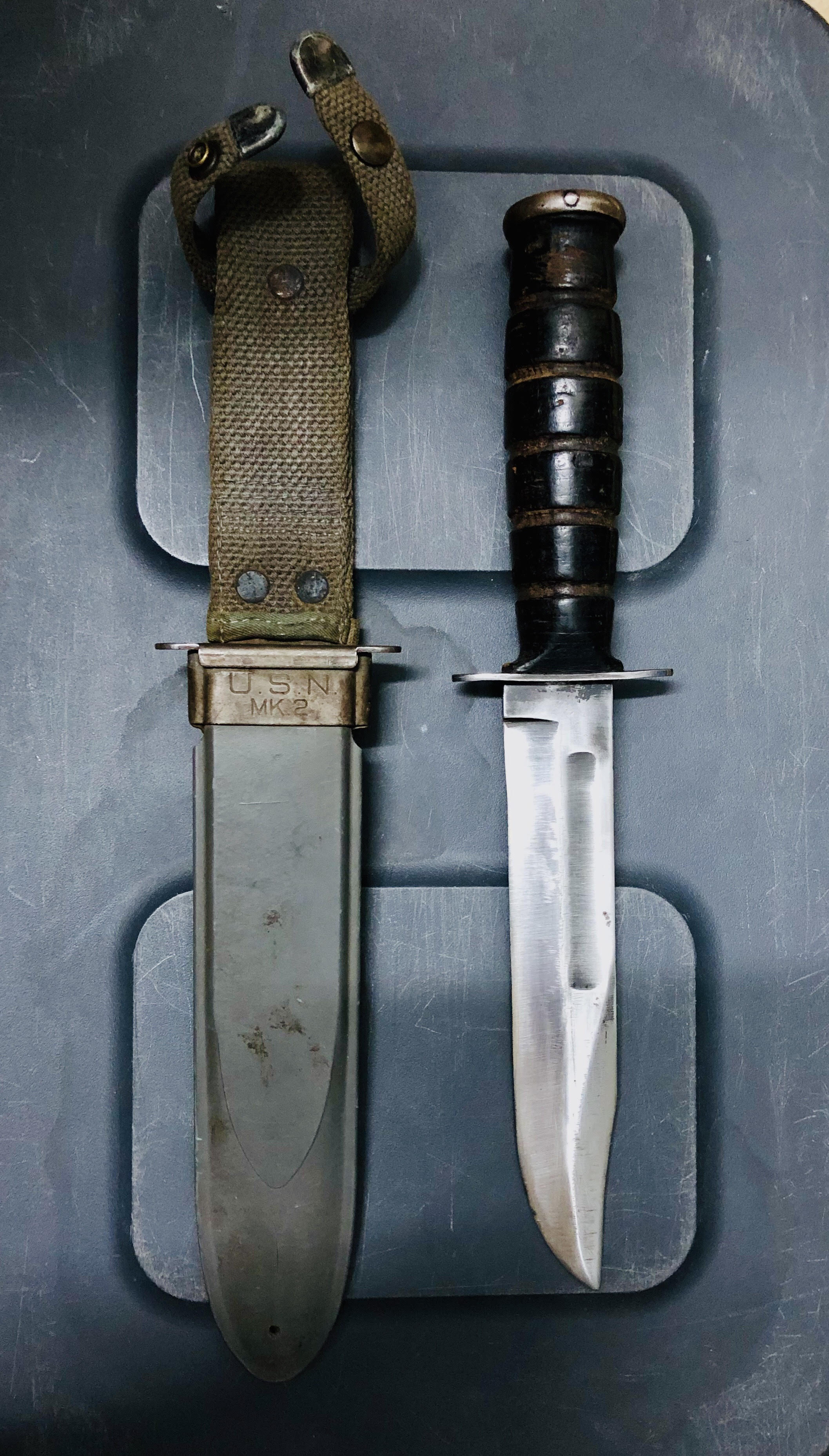
The sharpening question splits the knife world into its two standing camps, and the thread follows the script. The preservation argument leans on condition: wartime examples with honest wear, intact leather washers and clear stamps have collector value that resets every time someone puts fresh steel on a wheel. Sharpening removes metal and decades of history, and no amount of skill brings it back.
The use argument is older than collecting itself. These knives were issued as working tools for sailors and Seabees, and the design was deliberately simple so it could be sharpened in the field on whatever stone a unit carried. A Mark 2 that never cuts again is, in that reading, a knife turned into a paperweight.
Both sides have a point, and the middle path is the one most experienced collectors actually take. The blade's value as an heirloom lives in the object itself, not the edge geometry, and its value as a tool lives in whether it cuts. Honing on a stone by hand, without grinding the profile or removing the fuller, restores function while leaving the story intact. Power sharpening, belt sanders and polishing wheels are the destructive end of the spectrum.
There is also a practical note the thread touches: 1095 carbon steel from the 1940s that has sat in a drawer or a leather sheath for eighty years usually needs rust treatment more than it needs an edge. Cleaning corrosion and waxing the leather washers does more for the knife's future than any argument about sharpness.
The heirloom stays an heirloom either way. What the owner decides is whether it remains a knife or becomes an artifact, and that call is his to make, not the thread's.