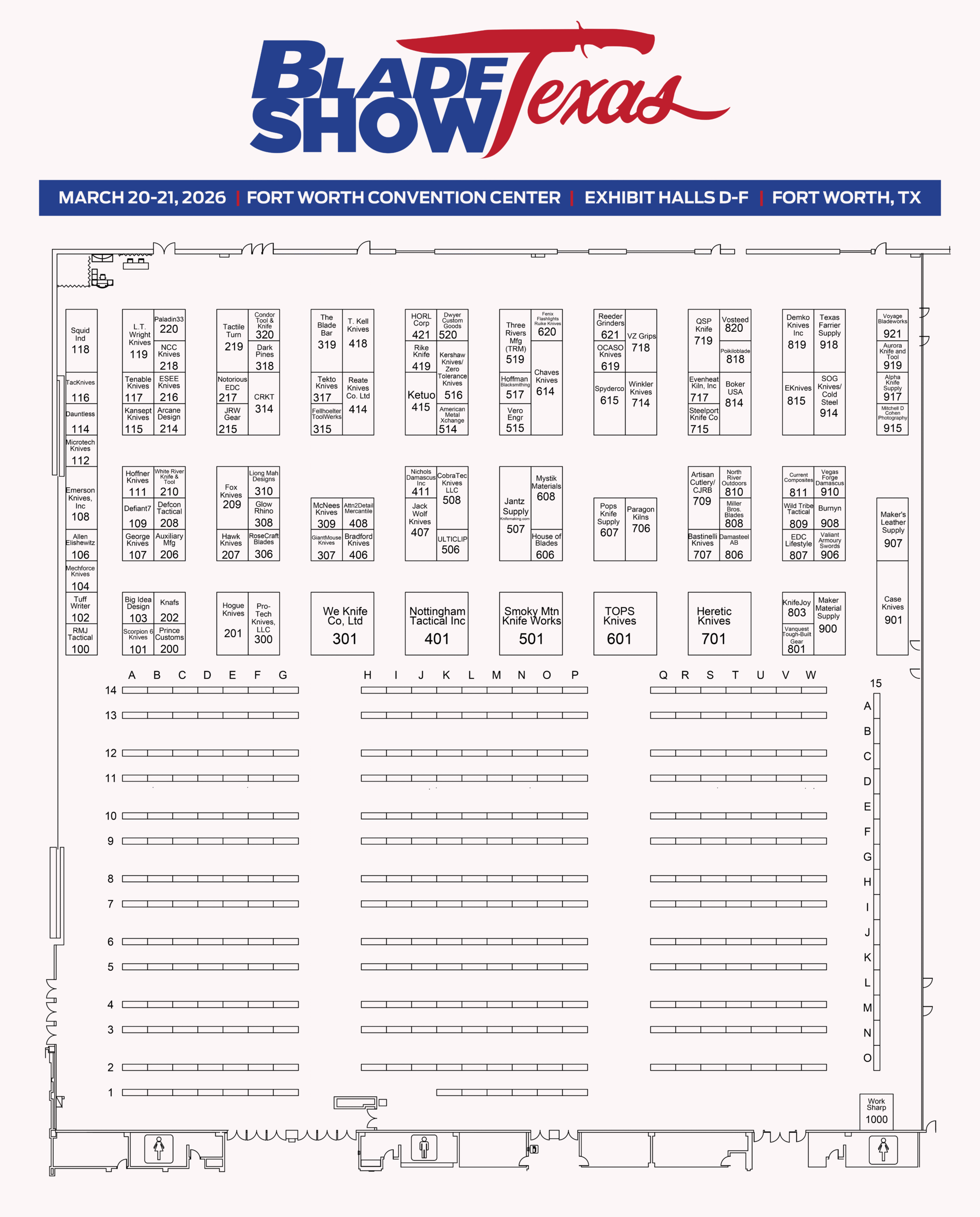
The organizer posted its 2026 floor plan before the March 20-21 show, which is the single most useful document for anyone facing a hall of more than 400 exhibitors. At that scale a route stops being optional. Without one, a visitor spends the first two hours discovering the same aisle twice.
BLADE Show Texas describes its exhibitor mix in three parts: handcrafted knives, factory production and knifemaking supplies. Those are not just categories on a webpage; they describe different kinds of tables with different visiting rhythms. A custom maker's table rewards a long conversation and a close look at one or two pieces. A factory booth is built for throughput, with a season's lineup laid out for dealers to scan. Supply vendors serve the makers themselves.
The published plan also reflects the practical geography of the Fort Worth Convention Center. Booth numbers, aisle positions and the location of demo or feature areas are laid out so a visitor can group visits by zone rather than zigzagging across the hall. File names on the organizer's site show the plan was revised repeatedly through January, February and March of 2026, which tells you exhibitor assignments were still settling close to the show.

How to work a hall this size
Experienced attendees tend to follow the same pattern. Reach the custom section early, while tables are quiet and makers have time to talk, then move to factory booths once the doors have been open a few hours. A second pass later in the day catches the supply vendors and anything the first sweep missed. That order is not a rule, but it follows from how the three categories behave.
Third-party exhibitor directories have named companies associated with the event, including Bradford Knives, MachineWise, McNees Knives, OCASO Knives, WE Knife Co. and WITHARMOUR. Those lists blend editions and should be treated as indications rather than a confirmed 2026 roster. The organizer's own plan and exhibitor page are the sources that count.
What the plan cannot tell you
A floor plan fixes booth numbers, not the experience. It cannot tell you which table will have a queue, which maker sold out on Friday, or where a spontaneous demonstration will pull a crowd. The 2026 show also ran factory and custom awards, free demos and on-floor giveaways, all of which change how people move through the hall in real time.
A published plan is also a record of how a show grows. The Texas site's floor plan files were revised repeatedly through the early months of 2026, which is normal when exhibitor assignments settle close to opening. A returning visitor who printed the January version and used it in March would have been working from an outdated map. That is a small detail with a practical consequence: booth numbers are a snapshot, not a permanent address. The useful habit is to download the plan in the week of the show, then mark a route that starts with the quiet tables and ends with the factory booths, rather than trusting a document saved months earlier.
One caution for anyone reusing an old map: booth assignments change between editions. The 2026 plan is a record of that March weekend, not a guide to the March 12-13, 2027 return. Wait for the organizer to publish the new plan before marking a route.