"Front flippers reward a trained thumb and punish a lazy one." EDC Deal put that line at the top of a November buying guide, and it is the most honest sentence written about the opening style this year.
Earlier this week a collector on r/knives posted a photo titled Front Flipper Family: fifteen knives in four rows, from a Knife Standards Station Express and a Damned Designs Oni Tanto to two Vosteed Raccoon Cubs, a Böker Damascus Stubby, a Kizer Mini Momo, a Kizer Kobold 2, a CJRB Fugly and a Krudo Feroce CF. One person, one opening style, fifteen variations on it. The comments did what r/knives does: half the replies wanted to know whether the Medford clone really front flips, and the other half said they tried one front flipper once and gave up.
Both reactions are correct, and the mechanics explain why. On a conventional flipper the tab hangs off the rear of the handle and your index finger pulls it through a long arc. On a front flipper the tab sits on the spine at the pivot end, and your thumb pushes it up and over a much shorter travel. The lever is shorter, so the same detent force feels heavier, and a detent that would be crisp on a rear flipper can stall a front flipper halfway through its arc. The knife either needs a lighter break, which invites blade creep in the pocket, or a thumb that has learned the roll.
That tuning problem is the entire barrier. Rear flippers forgive. Front flippers do not. A blade that carries through on its own momentum marks a well-built one; a blade that needs a wrist flick marks a geometry problem, usually too much detent or too much lockbar preload.
What buyers get in exchange is a cleaner knife than any other opening style allows. No thumb studs interrupting the blade profile, no hole, no tab hanging out the back to snag on pocket seams. The closed package is a narrow rectangle that rides flush in a pocket, which is why front flippers cluster among compact and gentleman's folders. Collectors who carry in an office setting keep coming back to the silhouette for exactly this reason.
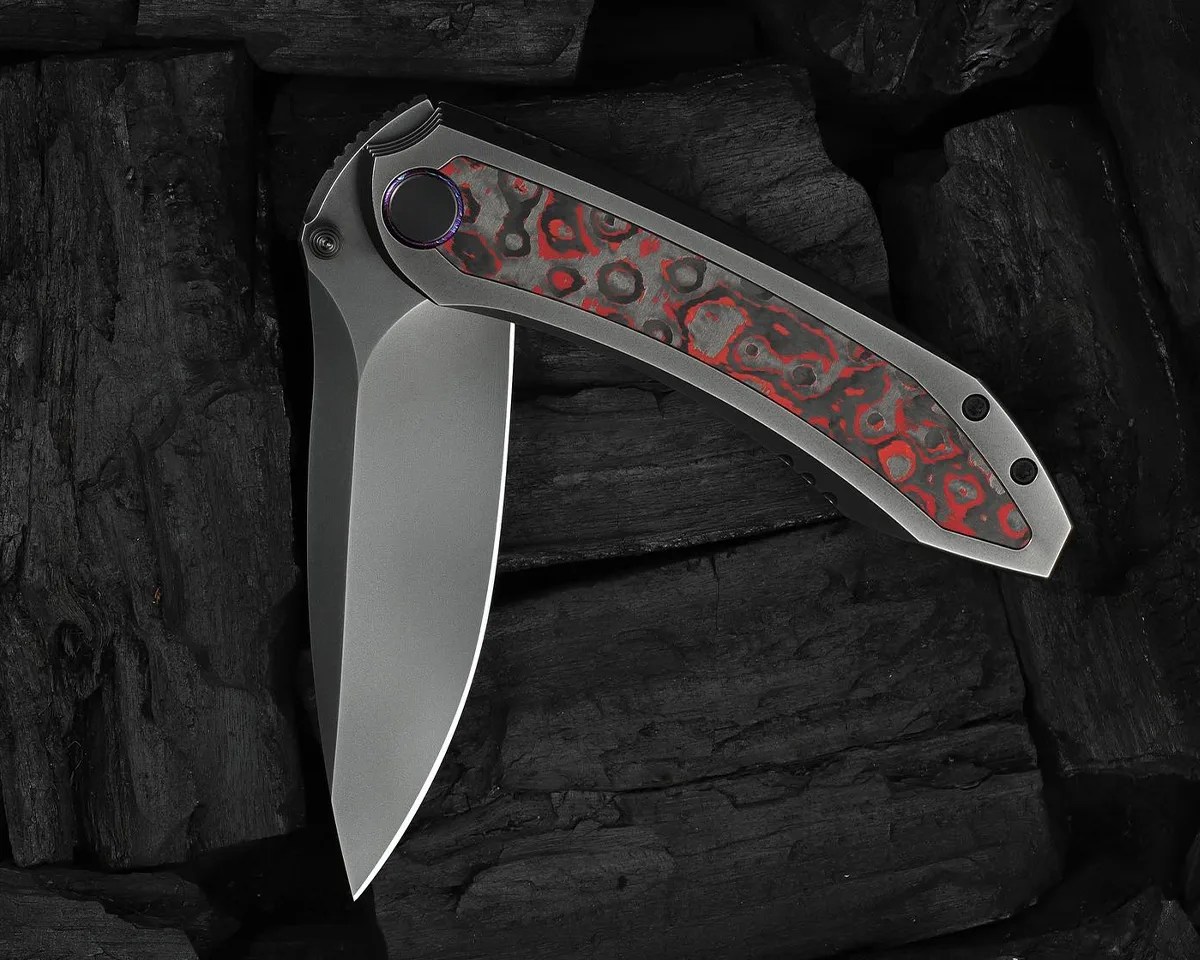
The catalog has grown around that loyalty. CIVIVI's Ki-V Plus sells at $42 as the entry test, a 2.52-inch Nitro-V blade on G10, small enough that the blade's low mass makes the timing forgiving. Kizer's Cormorant runs the same geometry across a steel ladder from S35VN at $65 up to 20CV on titanium at $101. At the top, Kizer's Feist 3 pairs a front flipper with S90V and titanium at $219, and WE Knife builds versions past $300. The style costs the same to make as any other opener, so the price spread tracks materials, not mechanism.
One limitation gets glossed over in product photos. Many front flipper tabs sit on one side of the spine, and a push-roll thumb stroke is not ambidextrous in the way a thumb stud or a Spyderco hole is. Left-handed buyers need to check each model individually, because the spec sheet rarely says.
None of this is a flaw. It is a filter. If your thumb learns the roll in a week and you want the cleanest closed silhouette a folder can have, the front flipper is the only opener that delivers it, and the fifteen-knife photo makes sense. If you want ambidexterity, a forgiving detent and zero practice curve, stay on rear flippers; no amount of catalog growth will change what the mechanism asks of you.