Two Spydercos on a cutting board, one American-made, one from the Chinese lightweight line, and a simple question underneath: what does everyone think about adding small sharpening choils to these blades? The thread picked up a steady stream of answers, and the same arguments show up every time the topic resurfaces, because the notch involved is smaller than a grain of rice and changes how a knife sharpens for its entire life.
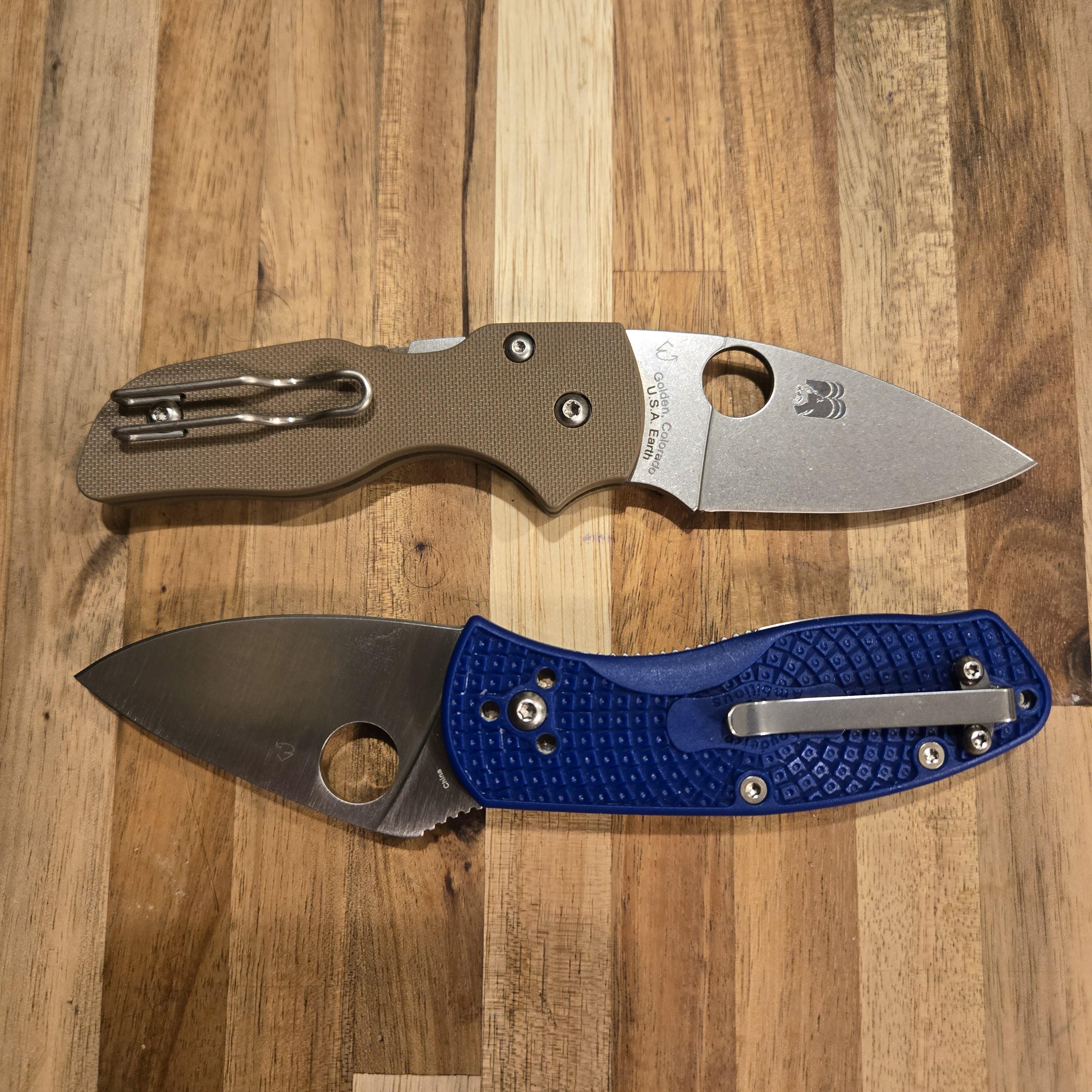
A sharpening choil is a small relief notch cut where the cutting edge meets the ricasso or plunge line. It is not the same thing as a finger choil, the larger cutout you can actually put a fingertip into on knives like the Native Chief. The sharpening version has one job: give the stone somewhere to run out at the heel.
Without one, the sharpened bevel has to blend into thicker unsharpened steel at the heel junction. A stone drawn across the edge stops dead when it hits that thicker section, so the last few millimeters of edge get less abrasion than the rest. Over several sharpenings that underworked heel sinks below the line of the bevel and produces a visible step, sometimes called a recurve at the heel, which is awkward to remove once it forms.
With a choil, the stone strokes all the way into the notch and stops. Every part of the bevel gets the same treatment, sharpening after sharpening, and the edge geometry stays where the factory set it. This matters on a Sharpmaker or any guided system, where Spyderco's own instructions put knife edges at the 40-degree inclusive setting, 20 degrees per side, and a consistent stroke length is the whole method.
The costs are real but small. Every millimeter of choil is a millimeter of steel that never cuts, which on a 3-inch folder trims usable edge length by a few percent. A large finger choil can hook cardboard or rope during long draws; a small sharpening choil is usually too shallow to snag anything. The notch itself should never be sharpened, since rounding it out only makes the transition between edge and ricasso worse.
That brings the discussion back to doing it by hand. Factory Spydercos run hard steels at production hardness, and cutting a clean choil into a finished blade takes diamond files or a powered burr, patience, and a steady hand on a heat-treated surface that will show every slip. A jagged homemade notch adds a scratch trail down the finish, and the modification voids the warranty on a knife that usually has none to spare. For most owners the better move is technique: work the heel slightly less aggressively than the belly so the whole edge wears down at the same rate, which achieves the same flat bevel without removing any steel.
The debate keeps coming back because Spyderco's own catalog sits on both sides. Many of its lightweights already carry a small choil at the plunge line, while plenty of other models run the edge straight into the ricasso with no relief at all. As long as both exist in the same brand, someone will keep asking why, and the comment sections will keep splitting the same way.